Featured Posts
Use the previous and next buttons to change the displayed slide.
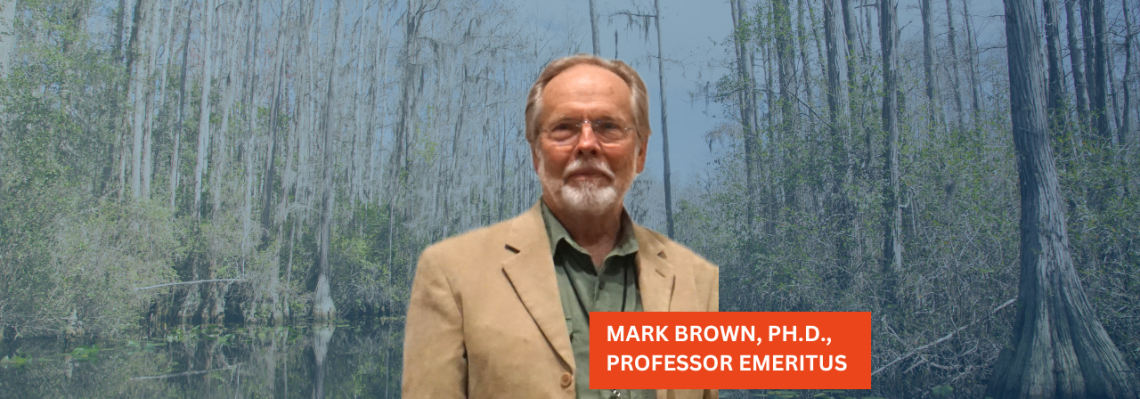
Mark Brown Recognized as Fellow of the American Ecological Engineering Society
Mark Brown, professor emeritus in ESSIE’s Environmental Engineering Sciences Department, was recognized as a Fellow of the American Ecological Engineering Society (AEES) at their annual meeting in Tampa, Florida in June. AEES bestows Fellow recognition to members with exemplary qualifications… Read More
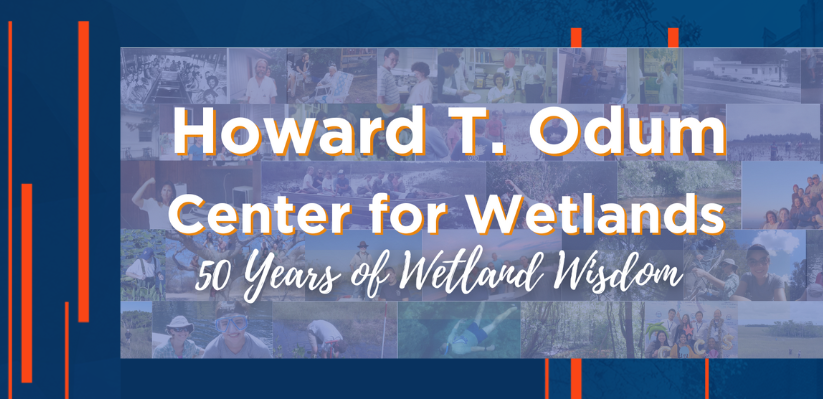
CFW Celebrates 50 Years of Wetland Wisdom
There was a radical coevolution of science, policy and industry in 1973, the year the Center for Wetlands was founded by H.T. Odum. What began as a project to assess the use of wetlands in recycling wastewater has evolved into… Read More
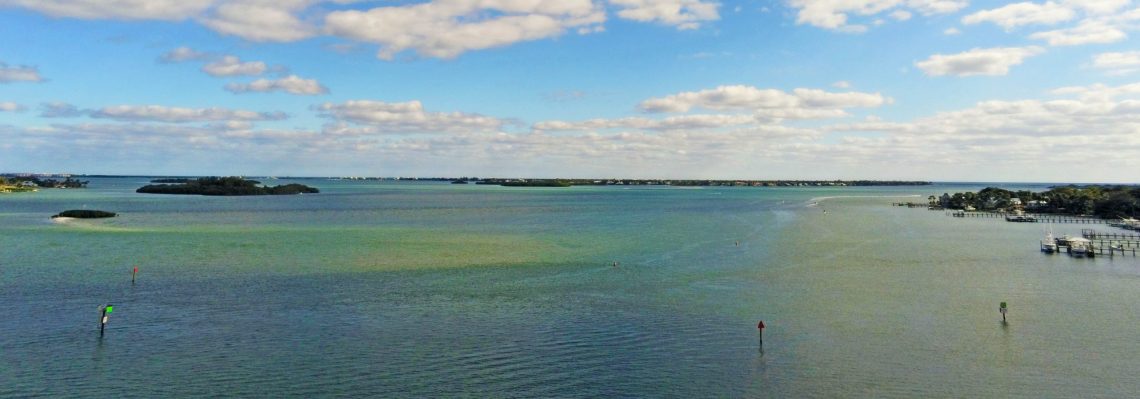
Researchers awarded $2.5 million to expand harmful algal bloom research along Florida coasts
A team of 11 professional researchers and scientists from the University of South Florida (USF), University of Florida (UF), and South Florida Water Management District (SFWMD) were awarded a $2.5 million grant from the U.S. Army Corps of Engineers to… Read More
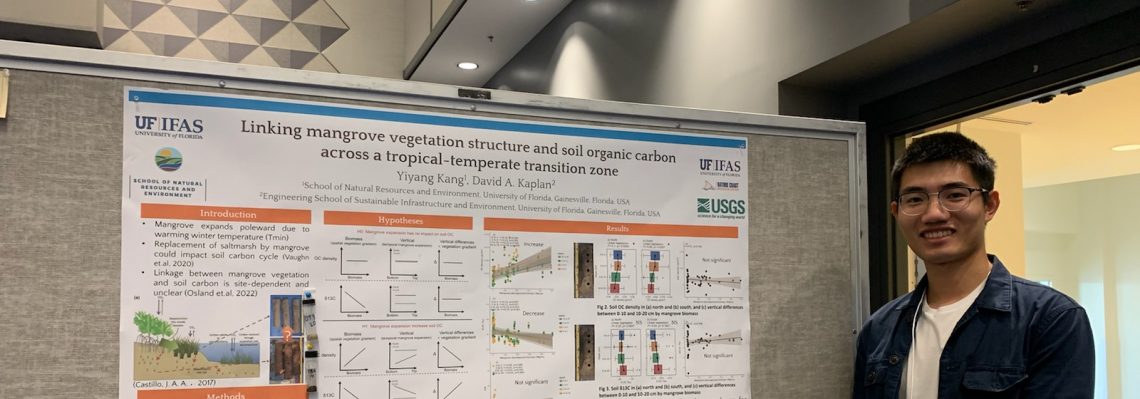
Student Calvin Kang Awarded Best Poster Presentation
Congrats to our student Yiyang Kang for receiving the best poster presentation award at the 2023 SNRE Research Symposium! Kang explored the connection between mangrove vegetation structure and soil organic carbon across a tropical-temperate transition zone. His research found that as the winter temperatures… Read More
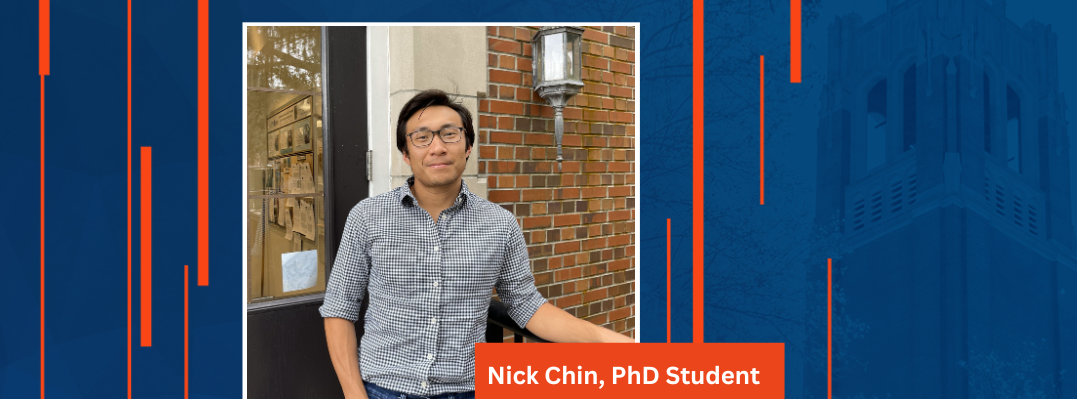
Student Nick Chin Earns Spring 2023 Water Institute Travel Award
Congratulations to our student Nick Chin for receiving the Spring 2023 Water Institute Travel Award from UF Water Institute! The travel award will support Nick in presenting his research in connecting red tide bloom timing and severity to environmental conditions… Read More